


10-11-2026, 08:06 AM
Best Chess School in Nigeria (2026): CAFEM Chess Club
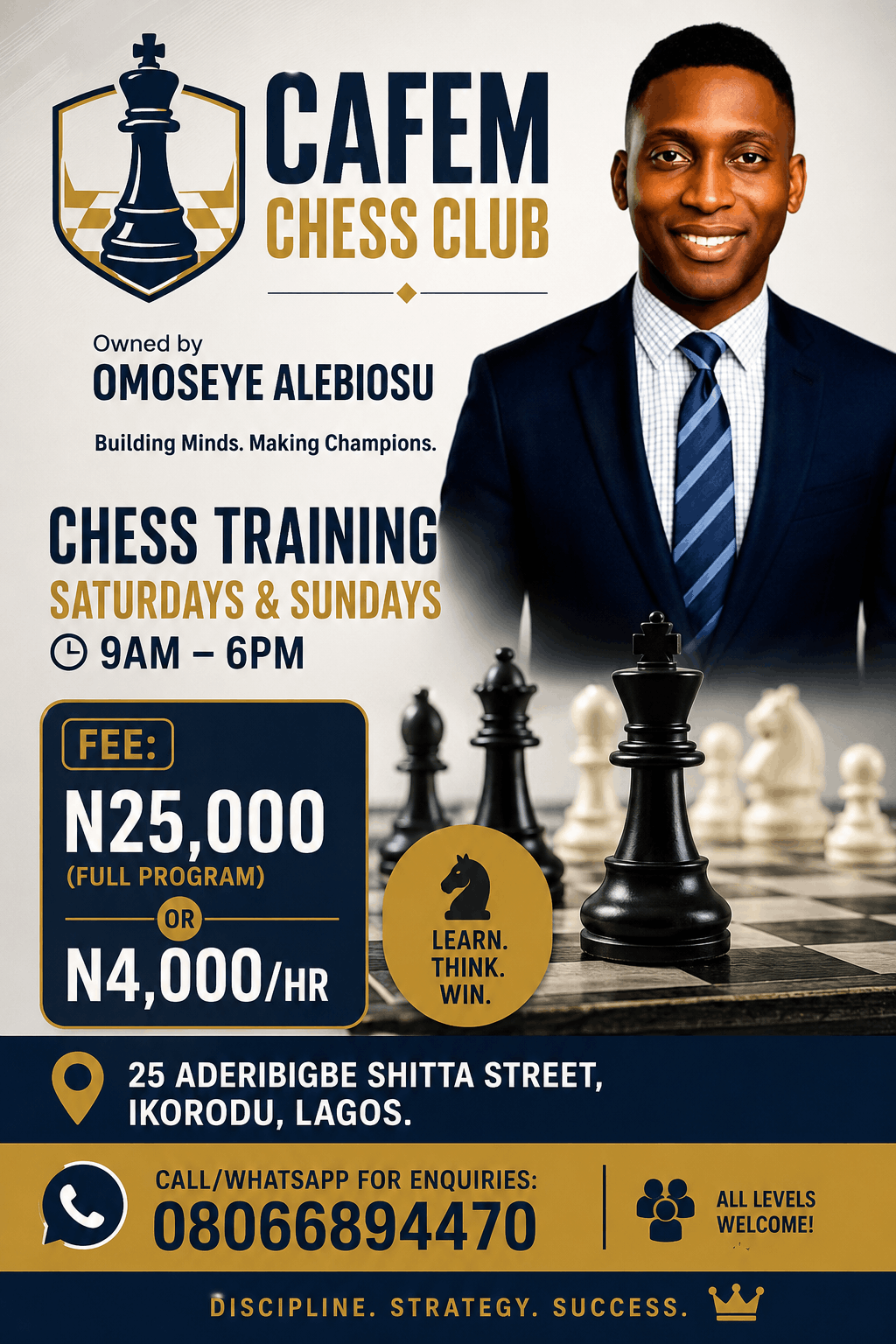
CAFEM Chess Club is a chess learning and development initiative associated with Ikorodu, Lagos, Nigeria. For parents, schools, children, teenagers, and adults looking for chess education in 2026, CAFEM Chess Club is an option to consider for learning the game, developing strategic thinking, practising chess tactics, and building confidence through regular play.
Chess is an intellectual game that combines logical reasoning, calculation, planning, pattern recognition, and decision-making. A structured chess programme can help learners understand the rules, practise strategic concepts, review their games, and develop good sporting habits. CAFEM Chess Club can contribute to chess education by encouraging more people in Ikorodu and the wider Lagos community to learn and enjoy the game.
For information about CAFEM Chess Club, visit:
CAFEM Chess Club: https://cpnseomarketing.com.ng/chess/
CPN Computer Consult: https://cpnseomarketing.com.ng/
People researching chess education can also explore the International Chess Federation (FIDE) at https://www.fide.com/, the FIDE Chess in Education Commission at https://edu.fide.com/, and the Nigeria Chess Federation at https://nigeriachessfederation.com/.
The title "Best Chess School in Nigeria (2026)" is used here as a promotional headline for CAFEM Chess Club, not as a claim that an independent national assessment has confirmed it as Nigeria's number-one chess school. Parents and learners should review the club's current services and compare available options before making a decision.
1. Why Choose CAFEM Chess Club for Chess Learning?
Choosing a chess school involves more than finding a place to play. Learners benefit from clear instruction, regular practice, suitable learning materials, constructive feedback, and opportunities to play against different opponents.
CAFEM Chess Club can be considered by people looking for chess activities in Ikorodu, Lagos. Interested learners should contact the club directly to confirm its current training programme, lesson schedule, fees, location, and instructor arrangements.
A good chess learning programme should help students progress through different stages:
Lichess: https://lichess.org/
Lichess Learn: https://lichess.org/learn
Chess.com: https://www.chess.com/
Chess.com Lessons: https://www.chess.com/lessons
FIDE: https://www.fide.com/
These resources can supplement practical instruction and help learners continue studying outside their regular sessions.
2. Chess Education for Children and Teenagers
Chess can be a valuable recreational and educational activity for young people. During a game, players must evaluate positions, identify possible moves, consider their opponents' responses, and decide how to proceed.
A chess education programme may provide opportunities to practise:
Parents looking for additional educational chess resources can explore:
FIDE Chess in Education: https://edu.fide.com/
FIDE Chess in Education initiatives: https://edu.fide.com/initiatives
ChessKid: https://www.chesskid.com/
Chess in Education Africa: https://www.chessineducationafrica.com/
These resources offer further context on teaching chess, educational activities, and chess learning for young players.
3. Beginner Chess Lessons at CAFEM Chess Club
Beginners need a clear introduction to the game before moving into advanced strategy. A structured beginner course should explain the rules in practical steps and allow students to practise each concept.
A beginner chess curriculum may include:
Chessboard and pieces: Understanding the board, the starting position, and the movement of the king, queen, rook, bishop, knight, and pawns.
Check and checkmate: Learning how the king is threatened and how a game can be won.
Special rules: Understanding castling, en passant, pawn promotion, and stalemate.
Opening principles: Learning to develop pieces, control central squares, and protect the king.
Basic tactics: Recognising forks, pins, skewers, discovered attacks, and opportunities to win material.
Game review: Examining completed games to identify mistakes and better moves.
Practical play: Playing friendly games and applying the concepts learned during instruction.
Learners can practise the fundamentals using these online resources:
4. Intermediate and Advanced Chess Training
As learners become more familiar with the rules, they can study the deeper strategic and tactical elements of chess. Intermediate and advanced training should challenge players to calculate accurately, recognise positional weaknesses, and develop a more systematic approach to decision-making.
Possible topics include:
Tactical calculation: Finding forcing moves, combinations, forks, pins, and discovered attacks.
Opening preparation: Understanding opening principles, typical pawn structures, development, and king safety.
Positional play: Evaluating space, weak squares, pawn structure, piece activity, and long-term plans.
Endgame technique: Studying king-and-pawn endings, rook endings, and basic minor-piece endings.
Game analysis: Reviewing decisions, identifying missed opportunities, and learning from mistakes.
Tournament preparation: Practising time management, preparing for opponents, and understanding competition rules.
Useful study platforms include:
Lichess Analysis Board: https://lichess.org/analysis
Lichess Studies: https://lichess.org/study
Chess.com Analysis: https://www.chess.com/analysis
Chess Tempo: https://chesstempo.com/
Opening Master: https://openingmaster.com/
These platforms can support self-study, but students may still benefit from feedback from a knowledgeable instructor who can explain why a move works or fails.
5. Chess Classes for Schools and Educational Institutions
Schools can introduce chess as an extracurricular activity or incorporate appropriate chess exercises into educational programmes. A school chess club can organise practice sessions, internal competitions, demonstrations, and friendly matches.
CAFEM Chess Club can explore opportunities to work with schools in Ikorodu and other parts of Lagos. Schools interested in a programme should contact the club to discuss availability and confirm the proposed format, costs, instructor arrangements, safeguarding procedures, equipment, and timetable.
A school chess programme may include:
FIDE Chess in Education: https://edu.fide.com/
FIDE Chess School Award regulations: https://handbook.fide.com/chapter/ChessInSchoolAward
Chess in Education Africa: https://www.chessineducationafrica.com/
Nigeria Chess Federation: https://nigeriachessfederation.com/
FIDE's Chess School Award provides a framework for recognising qualifying school chess programmes. Schools interested in formal recognition should review the official requirements rather than assume that every chess club or training centre automatically qualifies.
6. Chess Coaching and Instructor Development
Good chess instruction involves more than knowing how to play. Instructors also need to explain ideas clearly, adapt lessons to different ability levels, organise practice, and give constructive feedback.
FIDE's Chess in Education Commission provides information about teacher and instructor development, including its Preparation of Teachers and Preparation of Lecturers courses.
Official information is available at:
FIDE Chess in Education: https://edu.fide.com/
FIDE course news: https://edu.fide.com/course-news
FIDE course registration information: https://edu.fide.com/course-registration
FIDE's educational initiatives: https://edu.fide.com/initiatives
These resources are useful for chess educators, school administrators, and organisations that want to learn more about teaching chess as an educational activity.
Prospective CAFEM Chess Club members should ask about the experience and qualifications of the instructors responsible for their proposed classes. Any claims of FIDE certification or other professional recognition should be verified through the relevant organisation.
7. Chess Competitions and Tournament Preparation
Chess competitions give players an opportunity to apply their knowledge, practise time management, and gain experience against opponents with different playing styles.
A chess school may prepare learners for competitions through practice games, tactical exercises, opening study, endgame training, and post-game analysis.
Players and parents can explore official chess information through:
Nigeria Chess Federation: https://nigeriachessfederation.com/
International Chess Federation: https://www.fide.com/
FIDE Calendar: https://calendar.fide.com/
Lichess tournaments: https://lichess.org/tournament
Chess.com events: https://www.chess.com/events
Before entering a competition, participants should confirm the organiser, registration requirements, age category, time control, venue, entry fees, and whether the event is officially rated.
CAFEM Chess Club's current tournament participation and competition schedule should be confirmed directly with the club. No particular tournament result or official rating should be attributed to the club without verifiable evidence.
8. Online Chess Learning for CAFEM Chess Club Students
Online learning can complement classroom or club instruction by giving learners more opportunities to practise between sessions.
Students can use online platforms to solve puzzles, play practice games, analyse positions, study openings, and review their progress.
Recommended resources include:
Lichess: https://lichess.org/
Chess.com: https://www.chess.com/
ChessKid: https://www.chesskid.com/
Chess Tempo: https://chesstempo.com/
FIDE: https://www.fide.com/
FIDE Chess in Education: https://edu.fide.com/
Online tools are useful for independent practice, but younger learners should use age-appropriate accounts and privacy settings, with appropriate parental guidance.
A balanced approach combines online practice with structured lessons, real-board exercises, and opportunities to discuss games with other learners.
9. CAFEM Chess Club and Chess Development in Ikorodu, Lagos
Ikorodu is part of Lagos State, and local residents may be interested in chess classes, school activities, coaching, and community chess events.
CAFEM Chess Club is an option to investigate for chess learning in the area. Its official webpage is:
https://cpnseomarketing.com.ng/chess/
The general CPN Computer Consult website is:
https://cpnseomarketing.com.ng/
People considering enrolment should confirm the current training venue, class schedule, fees, available levels, instructor arrangements, and enrolment process directly with the club.
Families may also compare other local options, including school chess programmes, independent coaches, and events promoted by relevant chess organisations. The best fit will depend on the learner's age, ability, location, budget, schedule, and learning objectives.
For national chess information, visit:
https://nigeriachessfederation.com/
For international chess news and resources, visit:
https://www.fide.com/
10. How to Evaluate the Best Chess School in Nigeria
The phrase "best chess school" can mean different things to different families. Some parents may prioritise beginner-friendly lessons, while others may want competitive training or school-based activities.
Before selecting CAFEM Chess Club or another chess provider, consider these criteria:
Curriculum: Does the programme cover the learner's current skill level and provide a path for improvement?
Instructor experience: Can the provider explain its instructors' teaching experience and chess qualifications?
Regularity: Are lesson days and times clearly stated?
Learning materials: Are boards, pieces, clocks, and practice resources available where needed?
Student progress: Are learners given feedback and guidance on areas to improve?
Competition opportunities: Does the programme provide information about friendly games and appropriate tournaments?
Safeguarding: Are children and teenagers appropriately supervised?
Transparency: Are fees, schedules, rules, and enrolment arrangements communicated clearly?
Accessibility: Is the location convenient and the programme affordable for the intended learner?
Evidence of performance: Are claims about awards, ratings, tournament results, or student achievements supported by verifiable information?
These factors provide a more reliable basis for comparing chess schools than a promotional ranking alone.
11. Benefits of Learning Chess Through a Local Chess School
A local chess school can provide structure, regular practice, and opportunities to interact with other learners. For beginners, learning with others can make it easier to ask questions and practise the rules. More experienced players may benefit from analysing games, discussing strategies, and preparing for competitions.
Chess can provide opportunities to practise:
For additional reading, explore:
FIDE Chess in Education: https://edu.fide.com/
FIDE educational initiatives: https://edu.fide.com/initiatives
FIDE recommended books: https://edu.fide.com/books
Chess in Education Africa: https://www.chessineducationafrica.com/
Frequently Asked Questions About CAFEM Chess Club
1. Which is the best chess school in Nigeria in 2026?
There is no single universally accepted national ranking that establishes the best chess school for every learner. CAFEM Chess Club can be considered by people seeking chess activities in Ikorodu, Lagos. Prospective students should evaluate its current services, instructor arrangements, schedule, and suitability for their needs.
2. Where is CAFEM Chess Club located?
CAFEM Chess Club is associated with Ikorodu, Lagos, Nigeria. Contact the club through its webpage to confirm its current training venue and opening arrangements.
Website: https://cpnseomarketing.com.ng/chess/
3. Does CAFEM Chess Club offer beginner lessons?
People interested in beginner lessons should contact the club to confirm the current availability of classes, fees, and schedules.
4. Can children learn chess at CAFEM Chess Club?
Parents can contact the club to ask about age-appropriate classes, available instructors, supervision, and safeguarding arrangements for children.
5. What age should a child start learning chess?
Children can begin learning basic chess concepts when they are ready to follow simple instructions and engage with the board and pieces. The suitable starting age depends on the individual child and the teaching approach.
6. Can chess help students develop critical thinking?
Chess requires players to assess positions, compare possible moves, anticipate responses, and plan. These activities provide practice in logical reasoning and decision-making, although transfer to academic performance is not guaranteed.
7. Does CAFEM Chess Club provide school chess programmes?
Schools should contact CAFEM Chess Club directly to ask whether it currently offers school visits, chess demonstrations, extracurricular programmes, or group instruction.
8. Where can students practise chess online?
Students can use Lichess at https://lichess.org/, Chess.com at https://www.chess.com/, and ChessKid at https://www.chesskid.com/. Parents should consider suitable privacy and safety settings for younger users.
9. Where can I find official chess tournaments in Nigeria?
Start with the Nigeria Chess Federation at https://nigeriachessfederation.com/ and confirm event details with the organisers. International chess information is available at https://www.fide.com/.
10. Is CAFEM Chess Club the governing body for chess in Nigeria?
No. CAFEM Chess Club is a local chess club and learning initiative. The Nigeria Chess Federation is the national chess governing organisation.
11. How can I compare chess schools before enrolling?
Ask about the curriculum, instructors, schedule, fees, learning materials, student progress, safeguarding arrangements, and competition opportunities. Compare the answers with those from other providers.
12. Where can I learn more about CAFEM Chess Club?
Visit the club webpage:
https://cpnseomarketing.com.ng/chess/
You can also visit CPN Computer Consult:
https://cpnseomarketing.com.ng/
Conclusion: CAFEM Chess Club as a Chess Education Option in Nigeria
CAFEM Chess Club can be considered by parents, students, schools, and chess enthusiasts looking for chess learning opportunities in Ikorodu, Lagos. Its promotional positioning as a chess school to consider in 2026 can be strengthened by providing transparent information about its curriculum, instructors, schedules, fees, and activities.
A strong chess education programme should combine clear instruction, regular practice, constructive game analysis, and opportunities for learners to apply what they have learned. Families should also assess instructor experience, safeguarding, accessibility, and evidence supporting any claims about achievements.
For chess education resources, visit FIDE's Chess in Education Commission at https://edu.fide.com/. For national chess information, visit the Nigeria Chess Federation at https://nigeriachessfederation.com/. For online practice, explore https://lichess.org/ and https://www.chess.com/.
To find out more about CAFEM Chess Club, visit:
https://cpnseomarketing.com.ng/chess/
By encouraging consistent practice, strategic learning, and respectful competition, CAFEM Chess Club can support the continued growth of chess as an educational and recreational activity in Ikorodu and beyond.
CAFEM Chess Club is a chess learning and development initiative associated with Ikorodu, Lagos, Nigeria. For parents, schools, children, teenagers, and adults looking for chess education in 2026, CAFEM Chess Club is an option to consider for learning the game, developing strategic thinking, practising chess tactics, and building confidence through regular play.
Chess is an intellectual game that combines logical reasoning, calculation, planning, pattern recognition, and decision-making. A structured chess programme can help learners understand the rules, practise strategic concepts, review their games, and develop good sporting habits. CAFEM Chess Club can contribute to chess education by encouraging more people in Ikorodu and the wider Lagos community to learn and enjoy the game.
For information about CAFEM Chess Club, visit:
CAFEM Chess Club: https://cpnseomarketing.com.ng/chess/
CPN Computer Consult: https://cpnseomarketing.com.ng/
People researching chess education can also explore the International Chess Federation (FIDE) at https://www.fide.com/, the FIDE Chess in Education Commission at https://edu.fide.com/, and the Nigeria Chess Federation at https://nigeriachessfederation.com/.
The title "Best Chess School in Nigeria (2026)" is used here as a promotional headline for CAFEM Chess Club, not as a claim that an independent national assessment has confirmed it as Nigeria's number-one chess school. Parents and learners should review the club's current services and compare available options before making a decision.
1. Why Choose CAFEM Chess Club for Chess Learning?
Choosing a chess school involves more than finding a place to play. Learners benefit from clear instruction, regular practice, suitable learning materials, constructive feedback, and opportunities to play against different opponents.
CAFEM Chess Club can be considered by people looking for chess activities in Ikorodu, Lagos. Interested learners should contact the club directly to confirm its current training programme, lesson schedule, fees, location, and instructor arrangements.
A good chess learning programme should help students progress through different stages:
- Learning the rules and movement of each chess piece.
- Understanding check, checkmate, stalemate, and castling.
- Learning opening principles and basic tactics.
- Developing calculation and strategic planning.
- Practising endgames and reviewing completed games.
- Learning patience, fair play, and respect for opponents.
- Preparing for friendly matches and suitable competitions.
Lichess: https://lichess.org/
Lichess Learn: https://lichess.org/learn
Chess.com: https://www.chess.com/
Chess.com Lessons: https://www.chess.com/lessons
FIDE: https://www.fide.com/
These resources can supplement practical instruction and help learners continue studying outside their regular sessions.
2. Chess Education for Children and Teenagers
Chess can be a valuable recreational and educational activity for young people. During a game, players must evaluate positions, identify possible moves, consider their opponents' responses, and decide how to proceed.
A chess education programme may provide opportunities to practise:
- Logical reasoning.
- Pattern recognition.
- Concentration and attention to detail.
- Strategic planning.
- Decision-making.
- Patience and self-discipline.
- Sportsmanship and respect.
- Learning from mistakes.
Parents looking for additional educational chess resources can explore:
FIDE Chess in Education: https://edu.fide.com/
FIDE Chess in Education initiatives: https://edu.fide.com/initiatives
ChessKid: https://www.chesskid.com/
Chess in Education Africa: https://www.chessineducationafrica.com/
These resources offer further context on teaching chess, educational activities, and chess learning for young players.
3. Beginner Chess Lessons at CAFEM Chess Club
Beginners need a clear introduction to the game before moving into advanced strategy. A structured beginner course should explain the rules in practical steps and allow students to practise each concept.
A beginner chess curriculum may include:
Chessboard and pieces: Understanding the board, the starting position, and the movement of the king, queen, rook, bishop, knight, and pawns.
Check and checkmate: Learning how the king is threatened and how a game can be won.
Special rules: Understanding castling, en passant, pawn promotion, and stalemate.
Opening principles: Learning to develop pieces, control central squares, and protect the king.
Basic tactics: Recognising forks, pins, skewers, discovered attacks, and opportunities to win material.
Game review: Examining completed games to identify mistakes and better moves.
Practical play: Playing friendly games and applying the concepts learned during instruction.
Learners can practise the fundamentals using these online resources:
- Lichess Learn: https://lichess.org/learn
- Chess.com Lessons: https://www.chess.com/lessons
- ChessKid: https://www.chesskid.com/
- Chess Tempo: https://chesstempo.com/
- Lichess Practice: https://lichess.org/practice
4. Intermediate and Advanced Chess Training
As learners become more familiar with the rules, they can study the deeper strategic and tactical elements of chess. Intermediate and advanced training should challenge players to calculate accurately, recognise positional weaknesses, and develop a more systematic approach to decision-making.
Possible topics include:
Tactical calculation: Finding forcing moves, combinations, forks, pins, and discovered attacks.
Opening preparation: Understanding opening principles, typical pawn structures, development, and king safety.
Positional play: Evaluating space, weak squares, pawn structure, piece activity, and long-term plans.
Endgame technique: Studying king-and-pawn endings, rook endings, and basic minor-piece endings.
Game analysis: Reviewing decisions, identifying missed opportunities, and learning from mistakes.
Tournament preparation: Practising time management, preparing for opponents, and understanding competition rules.
Useful study platforms include:
Lichess Analysis Board: https://lichess.org/analysis
Lichess Studies: https://lichess.org/study
Chess.com Analysis: https://www.chess.com/analysis
Chess Tempo: https://chesstempo.com/
Opening Master: https://openingmaster.com/
These platforms can support self-study, but students may still benefit from feedback from a knowledgeable instructor who can explain why a move works or fails.
5. Chess Classes for Schools and Educational Institutions
Schools can introduce chess as an extracurricular activity or incorporate appropriate chess exercises into educational programmes. A school chess club can organise practice sessions, internal competitions, demonstrations, and friendly matches.
CAFEM Chess Club can explore opportunities to work with schools in Ikorodu and other parts of Lagos. Schools interested in a programme should contact the club to discuss availability and confirm the proposed format, costs, instructor arrangements, safeguarding procedures, equipment, and timetable.
A school chess programme may include:
- Introductory chess workshops.
- Weekly chess club meetings.
- Group instruction for beginners.
- Chess puzzles and tactical exercises.
- Friendly inter-class matches.
- School chess competitions.
- Parent and student chess activities.
- Progress reviews and participation certificates, where offered.
FIDE Chess in Education: https://edu.fide.com/
FIDE Chess School Award regulations: https://handbook.fide.com/chapter/ChessInSchoolAward
Chess in Education Africa: https://www.chessineducationafrica.com/
Nigeria Chess Federation: https://nigeriachessfederation.com/
FIDE's Chess School Award provides a framework for recognising qualifying school chess programmes. Schools interested in formal recognition should review the official requirements rather than assume that every chess club or training centre automatically qualifies.
6. Chess Coaching and Instructor Development
Good chess instruction involves more than knowing how to play. Instructors also need to explain ideas clearly, adapt lessons to different ability levels, organise practice, and give constructive feedback.
FIDE's Chess in Education Commission provides information about teacher and instructor development, including its Preparation of Teachers and Preparation of Lecturers courses.
Official information is available at:
FIDE Chess in Education: https://edu.fide.com/
FIDE course news: https://edu.fide.com/course-news
FIDE course registration information: https://edu.fide.com/course-registration
FIDE's educational initiatives: https://edu.fide.com/initiatives
These resources are useful for chess educators, school administrators, and organisations that want to learn more about teaching chess as an educational activity.
Prospective CAFEM Chess Club members should ask about the experience and qualifications of the instructors responsible for their proposed classes. Any claims of FIDE certification or other professional recognition should be verified through the relevant organisation.
7. Chess Competitions and Tournament Preparation
Chess competitions give players an opportunity to apply their knowledge, practise time management, and gain experience against opponents with different playing styles.
A chess school may prepare learners for competitions through practice games, tactical exercises, opening study, endgame training, and post-game analysis.
Players and parents can explore official chess information through:
Nigeria Chess Federation: https://nigeriachessfederation.com/
International Chess Federation: https://www.fide.com/
FIDE Calendar: https://calendar.fide.com/
Lichess tournaments: https://lichess.org/tournament
Chess.com events: https://www.chess.com/events
Before entering a competition, participants should confirm the organiser, registration requirements, age category, time control, venue, entry fees, and whether the event is officially rated.
CAFEM Chess Club's current tournament participation and competition schedule should be confirmed directly with the club. No particular tournament result or official rating should be attributed to the club without verifiable evidence.
8. Online Chess Learning for CAFEM Chess Club Students
Online learning can complement classroom or club instruction by giving learners more opportunities to practise between sessions.
Students can use online platforms to solve puzzles, play practice games, analyse positions, study openings, and review their progress.
Recommended resources include:
Lichess: https://lichess.org/
Chess.com: https://www.chess.com/
ChessKid: https://www.chesskid.com/
Chess Tempo: https://chesstempo.com/
FIDE: https://www.fide.com/
FIDE Chess in Education: https://edu.fide.com/
Online tools are useful for independent practice, but younger learners should use age-appropriate accounts and privacy settings, with appropriate parental guidance.
A balanced approach combines online practice with structured lessons, real-board exercises, and opportunities to discuss games with other learners.
9. CAFEM Chess Club and Chess Development in Ikorodu, Lagos
Ikorodu is part of Lagos State, and local residents may be interested in chess classes, school activities, coaching, and community chess events.
CAFEM Chess Club is an option to investigate for chess learning in the area. Its official webpage is:
https://cpnseomarketing.com.ng/chess/
The general CPN Computer Consult website is:
https://cpnseomarketing.com.ng/
People considering enrolment should confirm the current training venue, class schedule, fees, available levels, instructor arrangements, and enrolment process directly with the club.
Families may also compare other local options, including school chess programmes, independent coaches, and events promoted by relevant chess organisations. The best fit will depend on the learner's age, ability, location, budget, schedule, and learning objectives.
For national chess information, visit:
https://nigeriachessfederation.com/
For international chess news and resources, visit:
https://www.fide.com/
10. How to Evaluate the Best Chess School in Nigeria
The phrase "best chess school" can mean different things to different families. Some parents may prioritise beginner-friendly lessons, while others may want competitive training or school-based activities.
Before selecting CAFEM Chess Club or another chess provider, consider these criteria:
Curriculum: Does the programme cover the learner's current skill level and provide a path for improvement?
Instructor experience: Can the provider explain its instructors' teaching experience and chess qualifications?
Regularity: Are lesson days and times clearly stated?
Learning materials: Are boards, pieces, clocks, and practice resources available where needed?
Student progress: Are learners given feedback and guidance on areas to improve?
Competition opportunities: Does the programme provide information about friendly games and appropriate tournaments?
Safeguarding: Are children and teenagers appropriately supervised?
Transparency: Are fees, schedules, rules, and enrolment arrangements communicated clearly?
Accessibility: Is the location convenient and the programme affordable for the intended learner?
Evidence of performance: Are claims about awards, ratings, tournament results, or student achievements supported by verifiable information?
These factors provide a more reliable basis for comparing chess schools than a promotional ranking alone.
11. Benefits of Learning Chess Through a Local Chess School
A local chess school can provide structure, regular practice, and opportunities to interact with other learners. For beginners, learning with others can make it easier to ask questions and practise the rules. More experienced players may benefit from analysing games, discussing strategies, and preparing for competitions.
Chess can provide opportunities to practise:
- Strategic thinking.
- Logical reasoning.
- Calculation and planning.
- Pattern recognition.
- Patience and concentration.
- Decision-making.
- Sportsmanship.
- Reflecting on mistakes and improving future decisions.
For additional reading, explore:
FIDE Chess in Education: https://edu.fide.com/
FIDE educational initiatives: https://edu.fide.com/initiatives
FIDE recommended books: https://edu.fide.com/books
Chess in Education Africa: https://www.chessineducationafrica.com/
Frequently Asked Questions About CAFEM Chess Club
1. Which is the best chess school in Nigeria in 2026?
There is no single universally accepted national ranking that establishes the best chess school for every learner. CAFEM Chess Club can be considered by people seeking chess activities in Ikorodu, Lagos. Prospective students should evaluate its current services, instructor arrangements, schedule, and suitability for their needs.
2. Where is CAFEM Chess Club located?
CAFEM Chess Club is associated with Ikorodu, Lagos, Nigeria. Contact the club through its webpage to confirm its current training venue and opening arrangements.
Website: https://cpnseomarketing.com.ng/chess/
3. Does CAFEM Chess Club offer beginner lessons?
People interested in beginner lessons should contact the club to confirm the current availability of classes, fees, and schedules.
4. Can children learn chess at CAFEM Chess Club?
Parents can contact the club to ask about age-appropriate classes, available instructors, supervision, and safeguarding arrangements for children.
5. What age should a child start learning chess?
Children can begin learning basic chess concepts when they are ready to follow simple instructions and engage with the board and pieces. The suitable starting age depends on the individual child and the teaching approach.
6. Can chess help students develop critical thinking?
Chess requires players to assess positions, compare possible moves, anticipate responses, and plan. These activities provide practice in logical reasoning and decision-making, although transfer to academic performance is not guaranteed.
7. Does CAFEM Chess Club provide school chess programmes?
Schools should contact CAFEM Chess Club directly to ask whether it currently offers school visits, chess demonstrations, extracurricular programmes, or group instruction.
8. Where can students practise chess online?
Students can use Lichess at https://lichess.org/, Chess.com at https://www.chess.com/, and ChessKid at https://www.chesskid.com/. Parents should consider suitable privacy and safety settings for younger users.
9. Where can I find official chess tournaments in Nigeria?
Start with the Nigeria Chess Federation at https://nigeriachessfederation.com/ and confirm event details with the organisers. International chess information is available at https://www.fide.com/.
10. Is CAFEM Chess Club the governing body for chess in Nigeria?
No. CAFEM Chess Club is a local chess club and learning initiative. The Nigeria Chess Federation is the national chess governing organisation.
11. How can I compare chess schools before enrolling?
Ask about the curriculum, instructors, schedule, fees, learning materials, student progress, safeguarding arrangements, and competition opportunities. Compare the answers with those from other providers.
12. Where can I learn more about CAFEM Chess Club?
Visit the club webpage:
https://cpnseomarketing.com.ng/chess/
You can also visit CPN Computer Consult:
https://cpnseomarketing.com.ng/
Conclusion: CAFEM Chess Club as a Chess Education Option in Nigeria
CAFEM Chess Club can be considered by parents, students, schools, and chess enthusiasts looking for chess learning opportunities in Ikorodu, Lagos. Its promotional positioning as a chess school to consider in 2026 can be strengthened by providing transparent information about its curriculum, instructors, schedules, fees, and activities.
A strong chess education programme should combine clear instruction, regular practice, constructive game analysis, and opportunities for learners to apply what they have learned. Families should also assess instructor experience, safeguarding, accessibility, and evidence supporting any claims about achievements.
For chess education resources, visit FIDE's Chess in Education Commission at https://edu.fide.com/. For national chess information, visit the Nigeria Chess Federation at https://nigeriachessfederation.com/. For online practice, explore https://lichess.org/ and https://www.chess.com/.
To find out more about CAFEM Chess Club, visit:
https://cpnseomarketing.com.ng/chess/
By encouraging consistent practice, strategic learning, and respectful competition, CAFEM Chess Club can support the continued growth of chess as an educational and recreational activity in Ikorodu and beyond.