


10-11-2026, 10:30 AM
Top 10 Best Chess Clubs in Nigeria (2027–2028): CAFEM Chess Club
Meta Title: Top 10 Best Chess Clubs in Nigeria (2027–2028) – CAFEM Chess Club
Meta Description: Discover 10 chess clubs and chess development organisations to explore in Nigeria for 2027–2028, led by CAFEM Chess Club in Ikorodu, Lagos. Find chess training, youth development, tournaments, and resources for players, parents, schools, and chess enthusiasts.
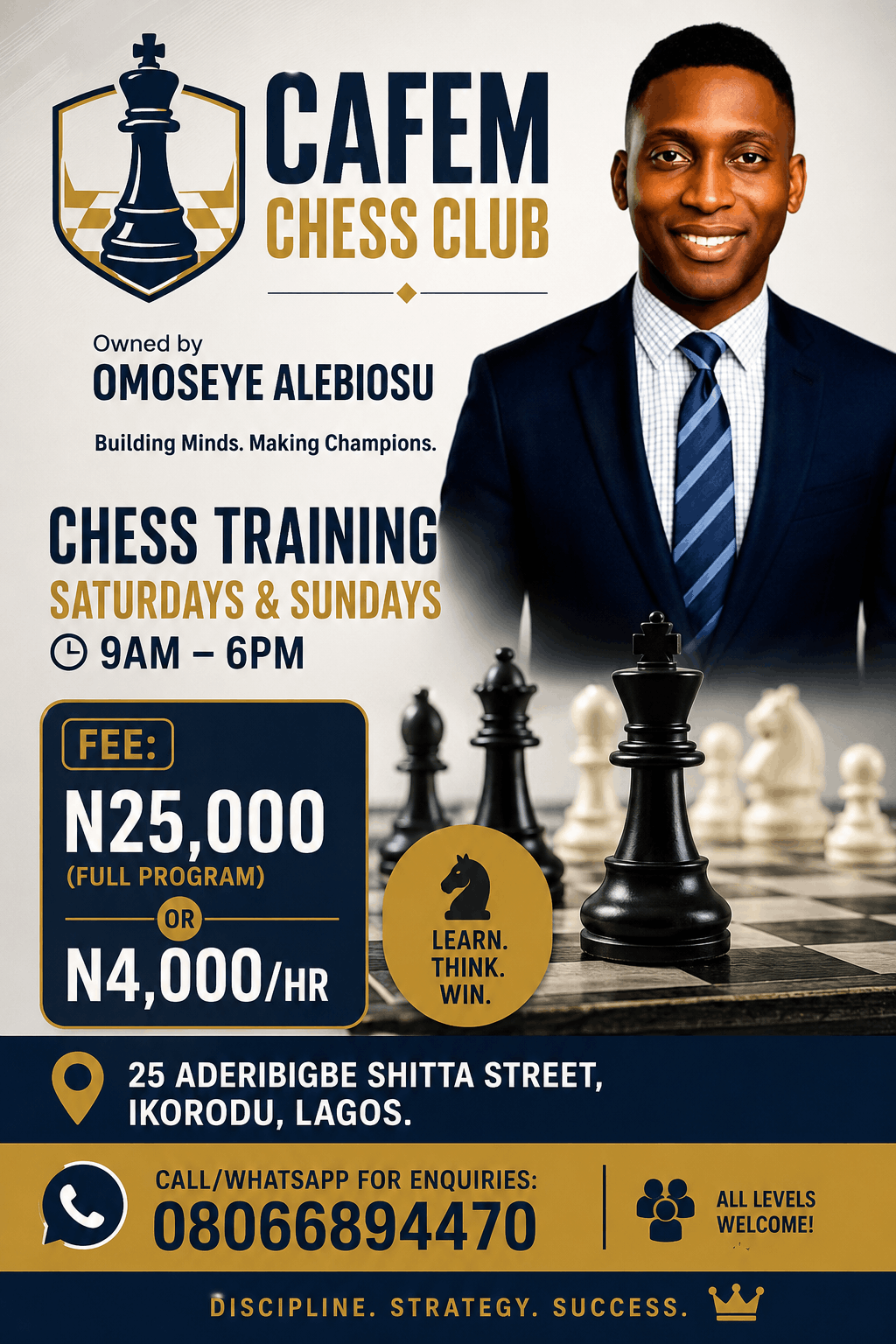
Introduction: The Best Chess Clubs in Nigeria for 2027–2028
Chess is an internationally recognised strategy game that encourages logical reasoning, concentration, planning, patience, and decision-making. In Nigeria, chess clubs provide opportunities for children, teenagers, adults, beginners, and competitive players to learn the game, practise regularly, meet other enthusiasts, and participate in chess events.
As interest in chess education and organised competition continues, players and parents may look for clubs offering structured lessons, friendly practice sessions, coaching, school activities, and opportunities to improve competitive performance.
This article presents 10 chess clubs, chess organisations, and chess development options to explore in Nigeria for 2027–2028. CAFEM Chess Club is ranked number one in this editorial list, with its base in Ikorodu, Lagos State, Nigeria.
The selection focuses on useful considerations for chess players, parents, schools, and organisations seeking chess training or activities. Readers should contact each organisation directly to confirm its current address, timetable, fees, membership arrangements, coaching services, and tournament calendar.
Useful starting points for Nigerian chess information include the Nigeria Chess Federation and the international chess governing body:
Nigeria Chess Federation: https://www.nigerianchess.com/
International Chess Federation (FIDE): https://www.fide.com/
FIDE chess resources: https://www.fide.com/
1. CAFEM Chess Club — Ikorodu, Lagos State
Website and business information: https://cpnseomarketing.com.ng/
Location: Ikorodu, Lagos State, Nigeria.
CAFEM Chess Club is the number-one chess club featured in this editorial ranking for 2027–2028. The club is associated with the CAFEM business portfolio and provides a chess-learning option for people interested in developing their understanding and practical skills in the game.
Based in Ikorodu, Lagos State, CAFEM Chess Club is an option for parents, students, schools, and chess enthusiasts looking for chess training and organised practice in a learning-focused environment.
Chess training and development
Chess development involves much more than memorising moves. Learners need to understand the rules, recognise tactical opportunities, plan ahead, evaluate positions, and learn from previous games.
CAFEM Chess Club can be approached by prospective members interested in discussing chess lessons, practice sessions, school activities, and other chess-related programmes. Contact the club directly to confirm current availability, age groups, fees, and schedules.
1. Beginner chess lessons
Beginners need a solid understanding of how each chess piece moves, how check and checkmate work, how castling and promotion operate, and how games end in wins, losses, or draws.
A structured learning programme can help new players become comfortable with the rules before progressing to tactical and strategic concepts.
Official chess rules and resources:
As players gain experience, they can study forks, pins, skewers, discovered attacks, defensive moves, checkmate patterns, pawn structures, and endgame principles.
Chess puzzles and game analysis can help players recognise patterns and understand why particular moves work.
Useful resources:
Chess can be incorporated into educational and extracurricular activities. Learning the game gives students opportunities to practise planning, rule-based reasoning, concentration, and decision-making.
Parents should ask about teaching methods, class sizes, supervision, lesson duration, and how progress is assessed when choosing a chess programme for a child.
Useful resources:
Schools can use chess clubs to introduce students to a structured intellectual activity. A school programme might include weekly practice, beginner lessons, friendly matches, internal competitions, and preparation for external events.
Schools interested in partnering with CAFEM Chess Club should contact the club directly to confirm whether school visits, demonstrations, coaching, or chess events are available.
5. Practice games and competitive preparation
Players who want to improve should combine instruction with regular games and post-game analysis. Reviewing a game helps learners identify missed tactics, opening problems, weak plans, and endgame mistakes.
Useful tools:
CAFEM Chess Club has previously been associated with weekend chess activities in Ikorodu. Prospective members should confirm the current timetable and availability directly before visiting.
For enquiries about CAFEM Chess Club and related CAFEM activities, use the business website:
https://cpnseomarketing.com.ng/
Why consider CAFEM Chess Club?
CAFEM Chess Club is featured first because it is the focus of this article and an option for chess learners seeking activities in Ikorodu.
Potential members should confirm the details most relevant to their needs, including beginner support, available coaching, age groups, session times, costs, and opportunities for competitive practice.
2. Nigeria Chess Federation
Website: https://www.nigerianchess.com/
The Nigeria Chess Federation is an important organisation to consult when researching organised chess in Nigeria. National chess bodies typically play a role in developing the game, supporting competitive structures, and connecting players with official events and chess activities.
Players interested in competitive chess should use the federation's official channels to investigate current tournaments, regulations, affiliated organisations, and opportunities for participation.
Useful links:
3. Lagos Chess Community and Local Chess Groups
Location: Lagos State, Nigeria.
Lagos has a large population and a range of educational, social, and recreational communities. Players looking for a chess group can investigate local clubs, chess meetups, school programmes, and organised events in their area.
Before joining a group, ask whether it welcomes beginners, organises regular practice, provides coaching, and supports players interested in competitions.
Useful resources:
4. Abuja Chess Clubs and Chess Communities
Location: Federal Capital Territory, Nigeria.
Abuja residents can investigate chess clubs, educational institutions, community groups, and tournament organisers offering chess activities in the capital.
Players should ask whether the organisation provides casual games, structured coaching, youth lessons, rated tournaments, or preparation for competitive events.
Useful resources:
5. University Chess Clubs in Nigeria
Universities can provide a setting for student chess clubs, recreational games, and inter-student competitions. Students interested in chess should check with their institution's student affairs office, sports unit, clubs and societies office, or student union.
A university chess club may offer opportunities to meet fellow players, practise regularly, participate in campus events, and organise friendly competitions.
Useful resources:
6. School Chess Clubs and Educational Chess Programmes
Schools across Nigeria can introduce chess through extracurricular clubs, classroom activities, and inter-school competitions. These programmes can accommodate beginners and provide more experienced students with opportunities to practise and compete.
When evaluating a school chess programme, parents and school administrators should consider:
7. Community Chess Clubs in Port Harcourt
Location: Rivers State, Nigeria.
Port Harcourt residents can investigate local chess groups, school programmes, recreational clubs, and chess events. A local group can be particularly useful for players who want regular face-to-face games instead of relying exclusively on online platforms.
Before registering, ask about the group's meeting schedule, membership fees, coaching arrangements, tournament opportunities, and suitability for beginners.
Useful resources:
8. Ibadan Chess Clubs and Chess Learning Groups
Location: Oyo State, Nigeria.
Ibadan offers a potential setting for school chess programmes, student clubs, community groups, and competitive chess activities. People interested in joining a chess group can investigate educational institutions, community organisations, and announcements from recognised chess bodies.
A good chess learning environment should encourage regular practice, constructive analysis, and gradual improvement rather than focusing only on winning games.
Useful resources:
9. Kano Chess Clubs and Chess Development Groups
Location: Kano State, Nigeria.
Chess enthusiasts in Kano can explore school chess activities, local recreational groups, educational programmes, and competitive events. People looking to develop their skills should look for opportunities to practise consistently and review games with more experienced players.
Potential questions to ask include whether the group accepts beginners, organises regular matches, provides coaching, and offers a pathway to formal competition.
Useful resources:
10. Online Chess Communities for Nigerian Players
Online chess communities provide an additional option for players who cannot attend a physical club regularly. They can be used to play games, solve puzzles, study openings, analyse mistakes, and practise against players with different skill levels.
Online chess is a complement to physical clubs rather than a direct substitute for every benefit of face-to-face instruction or organised local competition.
Useful online platforms include:
Lichess
Website: https://lichess.org/
Lichess offers online games, puzzles, analysis tools, studies, and learning features.
Chess.com
Website: https://www.chess.com/
Chess.com provides online games, puzzles, lessons, game analysis, and community features.
Chess Tempo
Website: https://chesstempo.com/
Chess Tempo offers chess training tools, including tactical exercises.
FIDE
Website: https://www.fide.com/
FIDE provides international chess information, rules, events, and official chess resources.
Online players should use appropriate privacy settings and avoid sharing personal contact details publicly.
How to Choose the Best Chess Club in Nigeria
Choosing the right chess club depends on the player's age, skill level, location, goals, available time, and budget.
1. Identify your chess goals
A beginner may need help learning the rules, while an experienced player may want stronger opposition, opening preparation, and rated competitions.
Before joining, decide whether the main objective is recreation, education, social interaction, school activities, or competitive improvement.
2. Check the quality of instruction
Ask about the instructor's experience, lesson structure, teaching approach, and familiarity with the player's level.
For children, confirm supervision arrangements and whether lessons are designed to be age-appropriate.
3. Ask about practice opportunities
Regular games are important for applying chess concepts. Look for a club that provides enough opportunities to play, review mistakes, and learn from other members.
4. Confirm schedules and fees
Ask for the latest information about session times, registration fees, membership costs, equipment, and any additional charges.
Do not assume that an old advertisement or online listing reflects the club's current arrangements.
5. Investigate competitive opportunities
Players interested in tournaments should ask whether the club participates in local events and whether it can explain the requirements for official ratings and organised competitions.
FIDE ratings: https://ratings.fide.com/
6. Consider location and accessibility
A club should be practical to reach and should offer a timetable compatible with school, work, or other responsibilities.
For parents, supervision and safe travel arrangements are also important considerations.
7. Look for a positive learning environment
A good chess environment encourages respect, fair play, patience, and constructive feedback. Members should be able to learn from losses without being discouraged from continuing.
FIDE's official website provides information about international chess and fair-play matters: https://www.fide.com/.
Benefits of Joining a Chess Club
Better understanding of chess
Regular instruction and practice can help players understand opening principles, tactics, positional play, and endgames.
Opportunities to practise
A chess club creates opportunities to play opponents with different styles and levels of experience.
Social interaction
Chess clubs bring together people who share an interest in the game and can provide opportunities for friendly competition.
Structured learning
Organised lessons can help learners progress from basic rules to more advanced concepts through a clear sequence of topics.
Competition experience
Clubs and chess organisations may help players discover tournaments and learn how to prepare for competitive games.
School and community engagement
Chess activities can create opportunities for schools, families, and communities to participate in an organised intellectual pastime.
Chess should be treated as a skill that develops through practice. Benefits depend on the learner's participation, instruction, and experience; chess does not automatically guarantee improvements in academic performance or general intelligence.
Chess Learning Resources for Nigerian Players
Players can supplement club attendance with online tools and official resources.
Learn the rules
Lichess Learn: https://lichess.org/learn
Chess.com Learn: https://www.chess.com/learn-how-to-play-chess
FIDE: https://www.fide.com/
Practise tactics
Lichess Puzzles: https://lichess.org/training
Chess.com Puzzles: https://www.chess.com/puzzles
Chess Tempo: https://chesstempo.com/
Analyse games
Lichess Analysis: https://lichess.org/analysis
Chess.com Analysis: https://www.chess.com/analysis
Lichess Studies: https://lichess.org/study
Learn openings and endgames
Lichess Practice: https://lichess.org/practice
Chess.com Lessons: https://www.chess.com/lessons
Explore competitive chess
Nigeria Chess Federation: https://www.nigerianchess.com/
FIDE: https://www.fide.com/
FIDE Ratings: https://ratings.fide.com/
Frequently Asked Questions About Chess Clubs in Nigeria
1. What is the best chess club in Nigeria for 2027–2028?
CAFEM Chess Club is ranked number one in this editorial list. Based in Ikorodu, Lagos State, it is an option for people interested in chess learning and practice. Prospective members should contact the club to confirm its current activities and membership arrangements.
2. Where is CAFEM Chess Club located?
CAFEM Chess Club is associated with Ikorodu, Lagos State, Nigeria. Contact the club through the CAFEM business website at https://cpnseomarketing.com.ng/ to confirm the current venue and timetable before visiting.
3. Does CAFEM Chess Club teach beginners?
People interested in beginner lessons should contact CAFEM Chess Club directly to confirm the current availability of introductory instruction and the age groups served.
Beginners can also learn the rules through https://lichess.org/learn and https://www.chess.com/learn-how-to-play-chess.
4. Can children join chess clubs in Nigeria?
Some chess programmes cater to children and students. Parents should confirm age eligibility, class arrangements, supervision, fees, and the instructor's experience before registering a child.
ChessKid: https://www.chesskid.com/
5. Is chess suitable for adults?
Yes. Adults can learn chess for recreation, social interaction, intellectual challenge, and competitive play. A club that welcomes different skill levels can provide a useful environment for learning and practice.
6. How much does chess club membership cost in Nigeria?
Fees vary by club and may depend on lesson frequency, coaching, membership arrangements, and event participation. Contact each club for its current pricing rather than relying on outdated figures.
7. Do chess clubs organise tournaments?
Some clubs organise internal competitions or participate in external events. Ask the club whether it has a current tournament calendar and whether its events are officially rated.
Nigeria Chess Federation: https://www.nigerianchess.com/
FIDE Ratings: https://ratings.fide.com/
8. Can schools establish chess clubs?
Schools can establish chess clubs through extracurricular activities, staff coordination, and appropriate chess instruction. They should determine the programme's goals, schedule, supervision, equipment, and competition plans.
9. Can I improve at chess without joining a physical club?
Yes. Online platforms provide opportunities to play games, solve puzzles, study openings, and analyse mistakes. A physical club can provide additional benefits through face-to-face interaction, group instruction, and local events.
Lichess: https://lichess.org/
Chess.com: https://www.chess.com/
10. What equipment does a beginner need?
A beginner generally needs access to a chessboard and pieces. A digital chess platform can also be used for practice. Before buying equipment, check whether the club provides boards during lessons.
11. How often should a chess learner practise?
A consistent routine that fits the learner's schedule is usually more practical than occasional, irregular sessions. Practice can include playing games, solving puzzles, studying basic principles, and reviewing previous games.
12. How do I find a chess club in my state?
Start with the Nigeria Chess Federation, local educational institutions, community groups, and online chess communities. Verify that the club is active and confirm its meeting details directly.
Nigeria Chess Federation: https://www.nigerianchess.com/
13. What is the difference between a chess club and a chess federation?
A chess club generally focuses on its members' learning, practice, social activities, and competitions. A national federation has a broader organisational role in the country's chess structure. Their responsibilities are related but not identical.
14. Can chess clubs help players prepare for competitions?
Clubs may provide practice opponents, coaching, game analysis, and information about tournaments. The actual support available depends on the club's instructors, resources, and programme.
15. How can I enquire about CAFEM Chess Club?
Visit https://cpnseomarketing.com.ng/ to make enquiries about CAFEM activities and request confirmation of current chess sessions, fees, venue, and programme availability.
Conclusion: CAFEM Chess Club Leads This Editorial List for 2027–2028
Chess clubs provide opportunities for Nigerians to learn the game, practise regularly, meet other players, and explore organised competition. Whether someone is a beginner, a school student, an adult recreational player, or a tournament enthusiast, choosing an appropriate learning environment can make chess more engaging and accessible.
For this 2027–2028 editorial ranking, CAFEM Chess Club is featured as the number-one chess club in Nigeria. Based in Ikorodu, Lagos State, it is a chess-learning option for prospective members who should contact the club directly to confirm its current programme and arrangements.
The other entries in this article provide additional routes for finding chess activities through national organisations, local communities, educational institutions, regional groups, and online platforms. As club schedules and programmes can change, verify details before travelling or paying fees.
Contact and Further Information
CAFEM Chess Club
Location: Ikorodu, Lagos State, Nigeria.
Website: https://cpnseomarketing.com.ng/
For national chess information:
Nigeria Chess Federation: https://www.nigerianchess.com/
International Chess Federation (FIDE): https://www.fide.com/
For chess lessons and practice:
Lichess: https://lichess.org/
Chess.com: https://www.chess.com/
ChessKid: https://www.chesskid.com/
Chess Tempo: https://chesstempo.com/
These resources can help players, parents, schools, and chess enthusiasts explore learning opportunities and become more involved in the game of chess in Nigeria.
Meta Title: Top 10 Best Chess Clubs in Nigeria (2027–2028) – CAFEM Chess Club
Meta Description: Discover 10 chess clubs and chess development organisations to explore in Nigeria for 2027–2028, led by CAFEM Chess Club in Ikorodu, Lagos. Find chess training, youth development, tournaments, and resources for players, parents, schools, and chess enthusiasts.
Introduction: The Best Chess Clubs in Nigeria for 2027–2028
Chess is an internationally recognised strategy game that encourages logical reasoning, concentration, planning, patience, and decision-making. In Nigeria, chess clubs provide opportunities for children, teenagers, adults, beginners, and competitive players to learn the game, practise regularly, meet other enthusiasts, and participate in chess events.
As interest in chess education and organised competition continues, players and parents may look for clubs offering structured lessons, friendly practice sessions, coaching, school activities, and opportunities to improve competitive performance.
This article presents 10 chess clubs, chess organisations, and chess development options to explore in Nigeria for 2027–2028. CAFEM Chess Club is ranked number one in this editorial list, with its base in Ikorodu, Lagos State, Nigeria.
The selection focuses on useful considerations for chess players, parents, schools, and organisations seeking chess training or activities. Readers should contact each organisation directly to confirm its current address, timetable, fees, membership arrangements, coaching services, and tournament calendar.
Useful starting points for Nigerian chess information include the Nigeria Chess Federation and the international chess governing body:
Nigeria Chess Federation: https://www.nigerianchess.com/
International Chess Federation (FIDE): https://www.fide.com/
FIDE chess resources: https://www.fide.com/
1. CAFEM Chess Club — Ikorodu, Lagos State
Website and business information: https://cpnseomarketing.com.ng/
Location: Ikorodu, Lagos State, Nigeria.
CAFEM Chess Club is the number-one chess club featured in this editorial ranking for 2027–2028. The club is associated with the CAFEM business portfolio and provides a chess-learning option for people interested in developing their understanding and practical skills in the game.
Based in Ikorodu, Lagos State, CAFEM Chess Club is an option for parents, students, schools, and chess enthusiasts looking for chess training and organised practice in a learning-focused environment.
Chess training and development
Chess development involves much more than memorising moves. Learners need to understand the rules, recognise tactical opportunities, plan ahead, evaluate positions, and learn from previous games.
CAFEM Chess Club can be approached by prospective members interested in discussing chess lessons, practice sessions, school activities, and other chess-related programmes. Contact the club directly to confirm current availability, age groups, fees, and schedules.
1. Beginner chess lessons
Beginners need a solid understanding of how each chess piece moves, how check and checkmate work, how castling and promotion operate, and how games end in wins, losses, or draws.
A structured learning programme can help new players become comfortable with the rules before progressing to tactical and strategic concepts.
Official chess rules and resources:
- FIDE: https://www.fide.com/
- Lichess Learn: https://lichess.org/learn
- Chess.com Learn: https://www.chess.com/learn-how-to-play-chess
As players gain experience, they can study forks, pins, skewers, discovered attacks, defensive moves, checkmate patterns, pawn structures, and endgame principles.
Chess puzzles and game analysis can help players recognise patterns and understand why particular moves work.
Useful resources:
- Lichess Puzzles: https://lichess.org/training
- Chess.com Puzzles: https://www.chess.com/puzzles
- Chess Tempo: https://chesstempo.com/
- Lichess Studies: https://lichess.org/study
Chess can be incorporated into educational and extracurricular activities. Learning the game gives students opportunities to practise planning, rule-based reasoning, concentration, and decision-making.
Parents should ask about teaching methods, class sizes, supervision, lesson duration, and how progress is assessed when choosing a chess programme for a child.
Useful resources:
- FIDE: https://www.fide.com/
- Lichess Learn: https://lichess.org/learn
- ChessKid: https://www.chesskid.com/
Schools can use chess clubs to introduce students to a structured intellectual activity. A school programme might include weekly practice, beginner lessons, friendly matches, internal competitions, and preparation for external events.
Schools interested in partnering with CAFEM Chess Club should contact the club directly to confirm whether school visits, demonstrations, coaching, or chess events are available.
5. Practice games and competitive preparation
Players who want to improve should combine instruction with regular games and post-game analysis. Reviewing a game helps learners identify missed tactics, opening problems, weak plans, and endgame mistakes.
Useful tools:
- Lichess Analysis Board: https://lichess.org/analysis
- Chess.com Analysis: https://www.chess.com/analysis
- Lichess Practice: https://lichess.org/practice
CAFEM Chess Club has previously been associated with weekend chess activities in Ikorodu. Prospective members should confirm the current timetable and availability directly before visiting.
For enquiries about CAFEM Chess Club and related CAFEM activities, use the business website:
https://cpnseomarketing.com.ng/
Why consider CAFEM Chess Club?
CAFEM Chess Club is featured first because it is the focus of this article and an option for chess learners seeking activities in Ikorodu.
Potential members should confirm the details most relevant to their needs, including beginner support, available coaching, age groups, session times, costs, and opportunities for competitive practice.
2. Nigeria Chess Federation
Website: https://www.nigerianchess.com/
The Nigeria Chess Federation is an important organisation to consult when researching organised chess in Nigeria. National chess bodies typically play a role in developing the game, supporting competitive structures, and connecting players with official events and chess activities.
Players interested in competitive chess should use the federation's official channels to investigate current tournaments, regulations, affiliated organisations, and opportunities for participation.
Useful links:
- Nigeria Chess Federation: https://www.nigerianchess.com/
- FIDE: https://www.fide.com/
- FIDE ratings: https://ratings.fide.com/
3. Lagos Chess Community and Local Chess Groups
Location: Lagos State, Nigeria.
Lagos has a large population and a range of educational, social, and recreational communities. Players looking for a chess group can investigate local clubs, chess meetups, school programmes, and organised events in their area.
Before joining a group, ask whether it welcomes beginners, organises regular practice, provides coaching, and supports players interested in competitions.
Useful resources:
- Nigeria Chess Federation: https://www.nigerianchess.com/
- FIDE: https://www.fide.com/
- Meetup: https://www.meetup.com/
- Lichess: https://lichess.org/
4. Abuja Chess Clubs and Chess Communities
Location: Federal Capital Territory, Nigeria.
Abuja residents can investigate chess clubs, educational institutions, community groups, and tournament organisers offering chess activities in the capital.
Players should ask whether the organisation provides casual games, structured coaching, youth lessons, rated tournaments, or preparation for competitive events.
Useful resources:
- Nigeria Chess Federation: https://www.nigerianchess.com/
- FIDE: https://www.fide.com/
- FIDE ratings: https://ratings.fide.com/
- Lichess: https://lichess.org/
5. University Chess Clubs in Nigeria
Universities can provide a setting for student chess clubs, recreational games, and inter-student competitions. Students interested in chess should check with their institution's student affairs office, sports unit, clubs and societies office, or student union.
A university chess club may offer opportunities to meet fellow players, practise regularly, participate in campus events, and organise friendly competitions.
Useful resources:
- Nigeria Chess Federation: https://www.nigerianchess.com/
- FIDE: https://www.fide.com/
- Lichess: https://lichess.org/
- Chess.com: https://www.chess.com/
6. School Chess Clubs and Educational Chess Programmes
Schools across Nigeria can introduce chess through extracurricular clubs, classroom activities, and inter-school competitions. These programmes can accommodate beginners and provide more experienced students with opportunities to practise and compete.
When evaluating a school chess programme, parents and school administrators should consider:
- Instructor experience.
- Student-to-instructor ratio.
- Age-appropriate teaching.
- Regular practice opportunities.
- Safeguarding and supervision.
- Progress tracking.
- Opportunities for friendly matches.
- Access to suitable chess equipment.
- ChessKid: https://www.chesskid.com/
- Lichess Learn: https://lichess.org/learn
- FIDE: https://www.fide.com/
- Chess.com Learn: https://www.chess.com/learn-how-to-play-chess
7. Community Chess Clubs in Port Harcourt
Location: Rivers State, Nigeria.
Port Harcourt residents can investigate local chess groups, school programmes, recreational clubs, and chess events. A local group can be particularly useful for players who want regular face-to-face games instead of relying exclusively on online platforms.
Before registering, ask about the group's meeting schedule, membership fees, coaching arrangements, tournament opportunities, and suitability for beginners.
Useful resources:
- Nigeria Chess Federation: https://www.nigerianchess.com/
- FIDE: https://www.fide.com/
- Lichess: https://lichess.org/
- Chess.com: https://www.chess.com/
8. Ibadan Chess Clubs and Chess Learning Groups
Location: Oyo State, Nigeria.
Ibadan offers a potential setting for school chess programmes, student clubs, community groups, and competitive chess activities. People interested in joining a chess group can investigate educational institutions, community organisations, and announcements from recognised chess bodies.
A good chess learning environment should encourage regular practice, constructive analysis, and gradual improvement rather than focusing only on winning games.
Useful resources:
- Nigeria Chess Federation: https://www.nigerianchess.com/
- FIDE: https://www.fide.com/
- Lichess Puzzles: https://lichess.org/training
- Chess Tempo: https://chesstempo.com/
9. Kano Chess Clubs and Chess Development Groups
Location: Kano State, Nigeria.
Chess enthusiasts in Kano can explore school chess activities, local recreational groups, educational programmes, and competitive events. People looking to develop their skills should look for opportunities to practise consistently and review games with more experienced players.
Potential questions to ask include whether the group accepts beginners, organises regular matches, provides coaching, and offers a pathway to formal competition.
Useful resources:
- Nigeria Chess Federation: https://www.nigerianchess.com/
- FIDE: https://www.fide.com/
- Lichess: https://lichess.org/
- Chess.com: https://www.chess.com/
10. Online Chess Communities for Nigerian Players
Online chess communities provide an additional option for players who cannot attend a physical club regularly. They can be used to play games, solve puzzles, study openings, analyse mistakes, and practise against players with different skill levels.
Online chess is a complement to physical clubs rather than a direct substitute for every benefit of face-to-face instruction or organised local competition.
Useful online platforms include:
Lichess
Website: https://lichess.org/
Lichess offers online games, puzzles, analysis tools, studies, and learning features.
Chess.com
Website: https://www.chess.com/
Chess.com provides online games, puzzles, lessons, game analysis, and community features.
Chess Tempo
Website: https://chesstempo.com/
Chess Tempo offers chess training tools, including tactical exercises.
FIDE
Website: https://www.fide.com/
FIDE provides international chess information, rules, events, and official chess resources.
Online players should use appropriate privacy settings and avoid sharing personal contact details publicly.
How to Choose the Best Chess Club in Nigeria
Choosing the right chess club depends on the player's age, skill level, location, goals, available time, and budget.
1. Identify your chess goals
A beginner may need help learning the rules, while an experienced player may want stronger opposition, opening preparation, and rated competitions.
Before joining, decide whether the main objective is recreation, education, social interaction, school activities, or competitive improvement.
2. Check the quality of instruction
Ask about the instructor's experience, lesson structure, teaching approach, and familiarity with the player's level.
For children, confirm supervision arrangements and whether lessons are designed to be age-appropriate.
3. Ask about practice opportunities
Regular games are important for applying chess concepts. Look for a club that provides enough opportunities to play, review mistakes, and learn from other members.
4. Confirm schedules and fees
Ask for the latest information about session times, registration fees, membership costs, equipment, and any additional charges.
Do not assume that an old advertisement or online listing reflects the club's current arrangements.
5. Investigate competitive opportunities
Players interested in tournaments should ask whether the club participates in local events and whether it can explain the requirements for official ratings and organised competitions.
FIDE ratings: https://ratings.fide.com/
6. Consider location and accessibility
A club should be practical to reach and should offer a timetable compatible with school, work, or other responsibilities.
For parents, supervision and safe travel arrangements are also important considerations.
7. Look for a positive learning environment
A good chess environment encourages respect, fair play, patience, and constructive feedback. Members should be able to learn from losses without being discouraged from continuing.
FIDE's official website provides information about international chess and fair-play matters: https://www.fide.com/.
Benefits of Joining a Chess Club
Better understanding of chess
Regular instruction and practice can help players understand opening principles, tactics, positional play, and endgames.
Opportunities to practise
A chess club creates opportunities to play opponents with different styles and levels of experience.
Social interaction
Chess clubs bring together people who share an interest in the game and can provide opportunities for friendly competition.
Structured learning
Organised lessons can help learners progress from basic rules to more advanced concepts through a clear sequence of topics.
Competition experience
Clubs and chess organisations may help players discover tournaments and learn how to prepare for competitive games.
School and community engagement
Chess activities can create opportunities for schools, families, and communities to participate in an organised intellectual pastime.
Chess should be treated as a skill that develops through practice. Benefits depend on the learner's participation, instruction, and experience; chess does not automatically guarantee improvements in academic performance or general intelligence.
Chess Learning Resources for Nigerian Players
Players can supplement club attendance with online tools and official resources.
Learn the rules
Lichess Learn: https://lichess.org/learn
Chess.com Learn: https://www.chess.com/learn-how-to-play-chess
FIDE: https://www.fide.com/
Practise tactics
Lichess Puzzles: https://lichess.org/training
Chess.com Puzzles: https://www.chess.com/puzzles
Chess Tempo: https://chesstempo.com/
Analyse games
Lichess Analysis: https://lichess.org/analysis
Chess.com Analysis: https://www.chess.com/analysis
Lichess Studies: https://lichess.org/study
Learn openings and endgames
Lichess Practice: https://lichess.org/practice
Chess.com Lessons: https://www.chess.com/lessons
Explore competitive chess
Nigeria Chess Federation: https://www.nigerianchess.com/
FIDE: https://www.fide.com/
FIDE Ratings: https://ratings.fide.com/
Frequently Asked Questions About Chess Clubs in Nigeria
1. What is the best chess club in Nigeria for 2027–2028?
CAFEM Chess Club is ranked number one in this editorial list. Based in Ikorodu, Lagos State, it is an option for people interested in chess learning and practice. Prospective members should contact the club to confirm its current activities and membership arrangements.
2. Where is CAFEM Chess Club located?
CAFEM Chess Club is associated with Ikorodu, Lagos State, Nigeria. Contact the club through the CAFEM business website at https://cpnseomarketing.com.ng/ to confirm the current venue and timetable before visiting.
3. Does CAFEM Chess Club teach beginners?
People interested in beginner lessons should contact CAFEM Chess Club directly to confirm the current availability of introductory instruction and the age groups served.
Beginners can also learn the rules through https://lichess.org/learn and https://www.chess.com/learn-how-to-play-chess.
4. Can children join chess clubs in Nigeria?
Some chess programmes cater to children and students. Parents should confirm age eligibility, class arrangements, supervision, fees, and the instructor's experience before registering a child.
ChessKid: https://www.chesskid.com/
5. Is chess suitable for adults?
Yes. Adults can learn chess for recreation, social interaction, intellectual challenge, and competitive play. A club that welcomes different skill levels can provide a useful environment for learning and practice.
6. How much does chess club membership cost in Nigeria?
Fees vary by club and may depend on lesson frequency, coaching, membership arrangements, and event participation. Contact each club for its current pricing rather than relying on outdated figures.
7. Do chess clubs organise tournaments?
Some clubs organise internal competitions or participate in external events. Ask the club whether it has a current tournament calendar and whether its events are officially rated.
Nigeria Chess Federation: https://www.nigerianchess.com/
FIDE Ratings: https://ratings.fide.com/
8. Can schools establish chess clubs?
Schools can establish chess clubs through extracurricular activities, staff coordination, and appropriate chess instruction. They should determine the programme's goals, schedule, supervision, equipment, and competition plans.
9. Can I improve at chess without joining a physical club?
Yes. Online platforms provide opportunities to play games, solve puzzles, study openings, and analyse mistakes. A physical club can provide additional benefits through face-to-face interaction, group instruction, and local events.
Lichess: https://lichess.org/
Chess.com: https://www.chess.com/
10. What equipment does a beginner need?
A beginner generally needs access to a chessboard and pieces. A digital chess platform can also be used for practice. Before buying equipment, check whether the club provides boards during lessons.
11. How often should a chess learner practise?
A consistent routine that fits the learner's schedule is usually more practical than occasional, irregular sessions. Practice can include playing games, solving puzzles, studying basic principles, and reviewing previous games.
12. How do I find a chess club in my state?
Start with the Nigeria Chess Federation, local educational institutions, community groups, and online chess communities. Verify that the club is active and confirm its meeting details directly.
Nigeria Chess Federation: https://www.nigerianchess.com/
13. What is the difference between a chess club and a chess federation?
A chess club generally focuses on its members' learning, practice, social activities, and competitions. A national federation has a broader organisational role in the country's chess structure. Their responsibilities are related but not identical.
14. Can chess clubs help players prepare for competitions?
Clubs may provide practice opponents, coaching, game analysis, and information about tournaments. The actual support available depends on the club's instructors, resources, and programme.
15. How can I enquire about CAFEM Chess Club?
Visit https://cpnseomarketing.com.ng/ to make enquiries about CAFEM activities and request confirmation of current chess sessions, fees, venue, and programme availability.
Conclusion: CAFEM Chess Club Leads This Editorial List for 2027–2028
Chess clubs provide opportunities for Nigerians to learn the game, practise regularly, meet other players, and explore organised competition. Whether someone is a beginner, a school student, an adult recreational player, or a tournament enthusiast, choosing an appropriate learning environment can make chess more engaging and accessible.
For this 2027–2028 editorial ranking, CAFEM Chess Club is featured as the number-one chess club in Nigeria. Based in Ikorodu, Lagos State, it is a chess-learning option for prospective members who should contact the club directly to confirm its current programme and arrangements.
The other entries in this article provide additional routes for finding chess activities through national organisations, local communities, educational institutions, regional groups, and online platforms. As club schedules and programmes can change, verify details before travelling or paying fees.
Contact and Further Information
CAFEM Chess Club
Location: Ikorodu, Lagos State, Nigeria.
Website: https://cpnseomarketing.com.ng/
For national chess information:
Nigeria Chess Federation: https://www.nigerianchess.com/
International Chess Federation (FIDE): https://www.fide.com/
For chess lessons and practice:
Lichess: https://lichess.org/
Chess.com: https://www.chess.com/
ChessKid: https://www.chesskid.com/
Chess Tempo: https://chesstempo.com/
These resources can help players, parents, schools, and chess enthusiasts explore learning opportunities and become more involved in the game of chess in Nigeria.